Posts

Ancient Culture ( Samskaram ) of Bharatham-5.5. : Swami Krishnananda.
Image
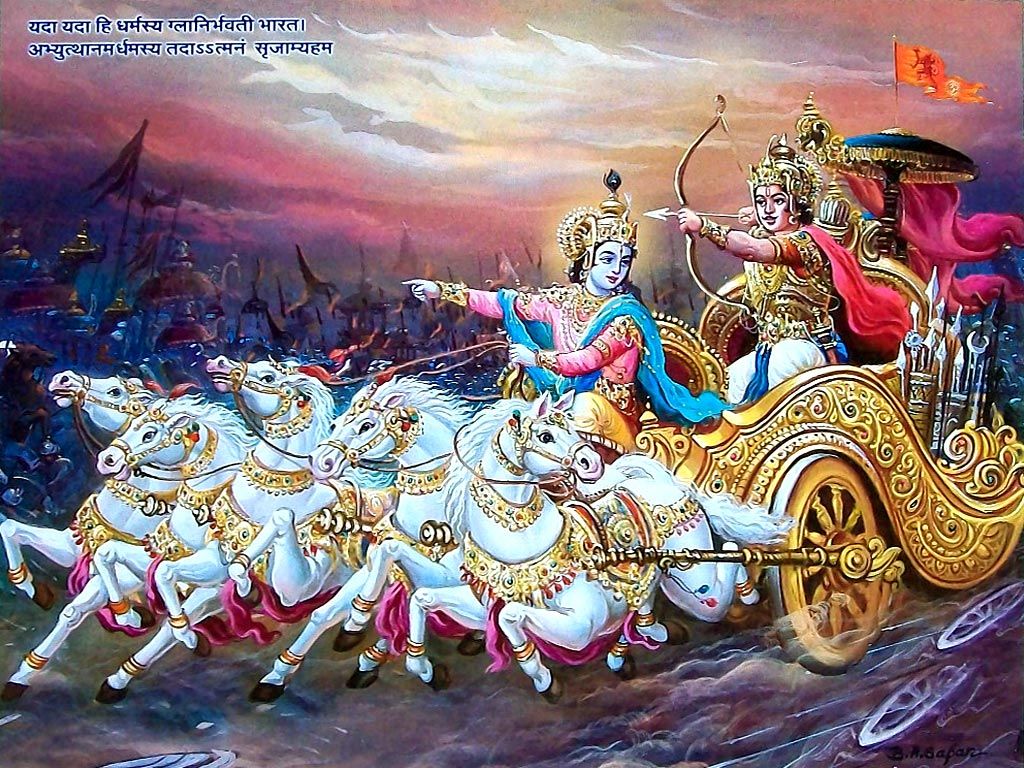
----------------------------------------------------------------------------------- #Opinion :Wednesday,  April  14, 2021. 07:16. PM. 2361. Chapter- 5. Introduction to the Epics - 5. ----------------------------------------------------------------------------------- An epic, or an Itihasa, as it is called in the Sanskrit language, is basically a history of events that took place some centuries back. We have epics everywhere in the world. We have Greek epics, the Iliad and the Odyssey written by Homer, which delineate the story of the Trojan War and such things, and the achievements of Ulysses, Achilles, and heroes of that kind of the Greek world. The Iliad and the Odyssey are epics. Epics are heroic poems. There is always a spirit of valour, chivalry, a warlike spirit, an action in the epics; and that you will find in the Ramayana and the Mahabharata as we have in the Iliad and the Odyssey. There is another important epic in the Latin language written by Virgil, and that epic ...

Ancient Culture ( Samskaram ) of Bharatham-5.4. : Swami Krishnananda.

Image
---------------------------------------------------------------------------------- #Opinion : Wednesday,  March  17, 2021. 09 : 25. AM. 2341. Chapter- 5. Introduction to the Epics - 4. ----------------------------------------------------------------------------------- The work of introducing the spirit of true culture, spirituality and religion, bringing it down to the earth, to the streets and the marketplace, to the fields and the shops, was attempted by experts like the writers of our great epics, especially the Ramayana and the Mahabharata. The Ramayana and the Mahabharata are known as stories of something that happened years back. In the same way as there are wrong notions of religion and spirituality and moksha, there are wrong notions about the intention behind the Ramayana and Mahabharata epics. These epics were not written merely to tell you some stories. They are not Aesop’s or Grimm’s fairy tales. They are a modus operandi of telling you the very same truth that has...

Ancient Culture ( Samskaram ) of Bharatham-5.3. : Swami Krishnananda.

Image
  --------------------------------------------------------------------------------------------------------------- #Opinion : Tuesday, January 26, 2021. 06:57. AM. 2322. Chapter- 5. Introduction to the Epics - 3. ------------------------------------------------------------------------------------------------------------------ So these are some of the conclusions that we wisely draw from the contents of the Vedas, the Brahmanas, the Aranyakas, the Upanishads and the Smritis, which laid down for us the pattern of the very concept of the aims of existence – dharma, artha, kama, moksha – in connection with which it became necessary to tell you something more as to what moksha is. Moksha is not something that will take place in the future; it is an eternity that is operating. Moksha is identical with timeless eternity, and therefore inasmuch as it is not in time, it is not a question of tomorrow. It is not an after-death affair. There is no question of ‘after’ because there is no time th...

Ancient Culture ( Samskaram ) of Bharatham-5.2. : Swami Krishnananda.

Image
  ------------------------------------------------------------------------------------------------------------------ OPINION : Thursday, January 21, 2021. 07:01 AM. 2320.  Chapter- 5. Introduction to the Epics - 2. ---------------------------------------------------------------------------------------------------------------------- How would you expect material comfort and emotional satisfaction and security of any kind unless there is a law that operates permitting you to have these perquisites? From where will you get your material needs? How will you have mental satisfaction, peace of mind and emotional security? How can you be guarded from the onslaughts of nature and other people in the world? Where comes the necessity for setting up a set of regulations and a system of law and order? On what ground will you contemplate the system of management of human society unless there is a basic, universally acceptable principle? This principle on which every other consideration is ...

Ancient Culture ( Samskaram ) of Bharatham-5.1. : Swami Krishnananda.

Image
OPINION : Wednesday, December 30, 2020. 11:25 AM. 2318.  Chapter- 5. Introduction to the Epics - 1. In our last sessions we discussed the foundations of Indian culture and the inner contents and classifications of the Vedas. Next, we moved further on to a consideration of special emphasis laid in the course of history on the different sections of the Vedas, with some group or community laying emphasis on the Samhitas, others on the Brahmanas, and others on the Aranyakas and the Upanishads. The orthodox Vedic pundits who are available to us even today in small numbers in India study the Veda Samhitas by rote, by heart, and they make it a profession. Study of the Veda Samhitas means the capacity to recite the Samhitas. The emphasis is laid on the Brahmanas in the form of the Mimamsa doctrine of ritualism, karma kanda as it is known in Sanskrit, and the externalised form of the application of the Veda mantras. The mantras of the Vedas were originally intended as prayers to the gods, c...

#Ancient Culture ( Samskaram ) of Bharatham-4.11. : Swami Krishnananda.

Image
  ---------------------------------------------------------------- # OPINION : Monday, November  09, 2020. 7:34. AM.  - 2299..  #Chapter- 4.The Fourfold Aim of Existence and How to Achieve It-11. ------------------------------------------------------- You have also to pay your gratitude to the rishis who handed over through a succession of Gurus and disciples the knowledge which you have gained. The study of the Veda, the study of the Upanishads or any scripture has been made possible to us because of the hierarchy of the knowledge that has come down to us through a lineage of Guru and disciple from rishis who are the originators of these scriptures. Therefore, the study of the scriptures is a daily ritual of the grihastha, by which he discharges the debt to the rishis. It is called brahma yajna. -------------------------------- The ancestors who are no more here, who have gone to the other world, also expect a recompense from us for all the good they have done to us...

#Ancient Culture ( Samskaram ) of Bharatham-4.10. : Swami Krishnananda.

Image
  ---------------------------------------------------------------- # OPINION : Thursday, October  08, 2020. 7:34. AM.  - 2261. #Chapter- 4.The Fourfold Aim of Existence and How to Achieve It-10. ---------------------------------------------------------------- 1. This is prevented by the rules and regulations of brahmacharya wherein, at least for the period of 20 to 25 years, it becomes incumbent on the student to conserve energy. A system of this conservation of energy has evolved by which the brahmacharin, or the student, is not allowed to indulge in anything that is sensory, and is also not permitted to brood over objects of sense mentally. So for 20 or 25 years – nowadays it is less in number, but originally for the first 25 years, at least, one should live a life of intense self-conserving discipline. 2. Whatever you have been in your young age will tell upon you when you are old. This is something you must remember. What did you do when you were young? Did you live a...